Victory with No Name, The
5 views
Get This Book
Prices may vary. Links may earn us a commission and open external websites.
Publisher
Audible Studios on Brilliance Audio
ISBN
ISBN-13: 9781522664932 ISBN-10: 1522664939Synopsis
Product Description
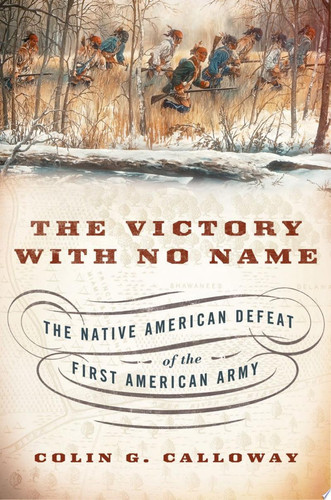
In 1791, General Arthur St. Clair led the United States Army in a campaign to destroy a complex of Indian villages at the Miami River in northwestern Ohio. Almost within reach of their objective, St. Clair's 1,400 men were attacked by about 1,000 Indians. The U.S. force was decimated, suffering nearly a thousand casualties in killed and wounded, while Indian casualties numbered only a few dozen. But despite the lopsided result, it wouldn't appear to carry much significance; it involved only a few thousand people, lasted less than three hours, and the outcome, which was never in doubt, was permanently reversed a mere three years later. Neither an epic struggle nor a clash that changed the course of history, the battle doesn't even have a name. Yet, as renowned Native American historian Colin Calloway demonstrates here, St. Clair's Defeat—as it came to be known—was hugely important for its time. It was both the biggest victory the Native Americans ever won, and, proportionately, the biggest military disaster the United States had suffered. With the British in Canada waiting in the wings for the American experiment in republicanism to fail, and some regions of the West gravitating toward alliance with Spain, the defeat threatened the very existence of the infant United States. Generating a deluge of reports, correspondence, opinions, and debates in the press, it produced the first congressional investigation in American history, while ultimately changing not only the manner in which Americans viewed, raised, organized, and paid for their armies, but the very ways in which they fought their wars.
Emphasizing the extent to which the battle has been overlooked in history, Calloway illustrates how this moment of great victory by American Indians became an aberration in the national story and a blank spot in the national memory.
About the Author
Colin G. Calloway is Professor of Native American Studies and John Kimball Jr. Professor of History at Dartmouth College. His books include One Vast Winter Count: The American West before Lewis and Clark, for which he won the Merle Curti Award and the Ray Allen Billington Prize, The Shawnees and the War for America, The Scratch of a Pen: 1763 and the Transformation of North America, and New Worlds for All. He recently won the 2011 American Indian History Lifetime Achievement Award.
In 1791, General Arthur St. Clair led the United States Army in a campaign to destroy a complex of Indian villages at the Miami River in northwestern Ohio. Almost within reach of their objective, St. Clair's 1,400 men were attacked by about 1,000 Indians. The U.S. force was decimated, suffering nearly a thousand casualties in killed and wounded, while Indian casualties numbered only a few dozen. But despite the lopsided result, it wouldn't appear to carry much significance; it involved only a few thousand people, lasted less than three hours, and the outcome, which was never in doubt, was permanently reversed a mere three years later. Neither an epic struggle nor a clash that changed the course of history, the battle doesn't even have a name. Yet, as renowned Native American historian Colin Calloway demonstrates here, St. Clair's Defeat—as it came to be known—was hugely important for its time. It was both the biggest victory the Native Americans ever won, and, proportionately, the biggest military disaster the United States had suffered. With the British in Canada waiting in the wings for the American experiment in republicanism to fail, and some regions of the West gravitating toward alliance with Spain, the defeat threatened the very existence of the infant United States. Generating a deluge of reports, correspondence, opinions, and debates in the press, it produced the first congressional investigation in American history, while ultimately changing not only the manner in which Americans viewed, raised, organized, and paid for their armies, but the very ways in which they fought their wars.
Emphasizing the extent to which the battle has been overlooked in history, Calloway illustrates how this moment of great victory by American Indians became an aberration in the national story and a blank spot in the national memory.
About the Author
Colin G. Calloway is Professor of Native American Studies and John Kimball Jr. Professor of History at Dartmouth College. His books include One Vast Winter Count: The American West before Lewis and Clark, for which he won the Merle Curti Award and the Ray Allen Billington Prize, The Shawnees and the War for America, The Scratch of a Pen: 1763 and the Transformation of North America, and New Worlds for All. He recently won the 2011 American Indian History Lifetime Achievement Award.
Dimensions
5.5 inches × 0.625 inches × 6.5 inches
0.21875 pounds