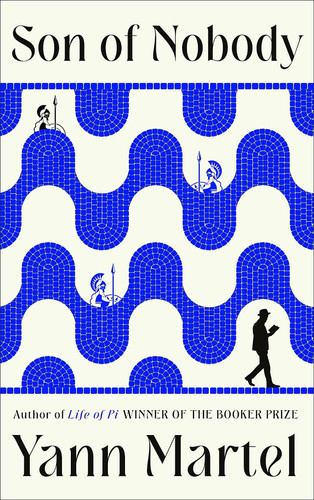
Son of Nobody
108 views
Get This Book
Prices may vary. Links may earn us a commission and open external websites.
Publisher
Random House
ISBN
ISBN-13: 9781039001503 ISBN-10: 9781039001503Synopsis
From the author of the international bestseller Life of Pi, a brilliant retelling of the Trojan War from two commoners: an ancient soldier and modern scholar.
“The past is never done with: always the song continues”
Harlow Donne has devoted his life to the Classical world. When a chance comes up to study an obscure collection of papyrus fragments at Oxford University, he seizes it. Though it means leaving his daughter and fracturing marriage back home in Canada, this is the kind of career break he desperately needs.
In the depths of the Bodleian Library, Harlow discovers a lost account of the Trojan War, a glimpse into the founding of Western civilization itself. He names the epic poem The Psoad, after its protagonist, a Greek commoner identified as Psoas of Midea, but known to all as son of nobody.
As sole translator and interpreter of The Psoad, Harlow dedicates the poem and its footnotes to his daughter, Helen. Under his gaze, the text unlocks echoes of Ancient Greece into the present day, and a personal message to his beloved child appears. Despite the two-thousand-year gap between the two, a thread hasn’t frayed: the universal song of homesickness and regret, of ambition, love, and grief.
In this masterpiece of myth, history, and domesticity, Son of Nobody explores how stories become facts, the price we pay to share them, and how we live—then, now, and always.
“The past is never done with: always the song continues”
Harlow Donne has devoted his life to the Classical world. When a chance comes up to study an obscure collection of papyrus fragments at Oxford University, he seizes it. Though it means leaving his daughter and fracturing marriage back home in Canada, this is the kind of career break he desperately needs.
In the depths of the Bodleian Library, Harlow discovers a lost account of the Trojan War, a glimpse into the founding of Western civilization itself. He names the epic poem The Psoad, after its protagonist, a Greek commoner identified as Psoas of Midea, but known to all as son of nobody.
As sole translator and interpreter of The Psoad, Harlow dedicates the poem and its footnotes to his daughter, Helen. Under his gaze, the text unlocks echoes of Ancient Greece into the present day, and a personal message to his beloved child appears. Despite the two-thousand-year gap between the two, a thread hasn’t frayed: the universal song of homesickness and regret, of ambition, love, and grief.
In this masterpiece of myth, history, and domesticity, Son of Nobody explores how stories become facts, the price we pay to share them, and how we live—then, now, and always.