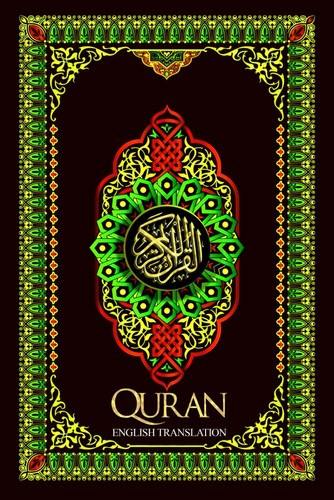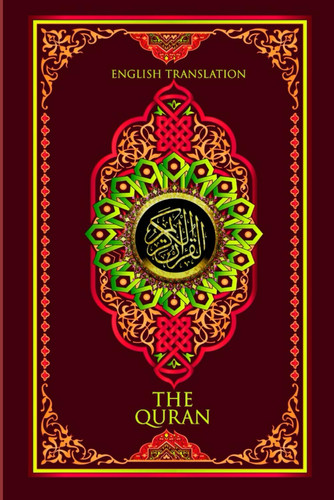
the holy Qurān: Recitation spelled Quran and Koran, the sacred scripture of Islam. According to conventional Islamic belief, the Qurʾān was revealed ... West Arabian towns Mecca and Medina beginning
9 views
Get This Book
Prices may vary. Links may earn us a commission and open external websites.
Publisher
Independently published
ISBN
ISBN-13: 9798865686798Synopsis
Qurʾān, (Arabic: “Recitation”) also spelled Quran and Koran, the sacred scripture of Islam. According to conventional Islamic belief, the Qurʾān was revealed by the angel Gabriel to the Prophet Muhammad in the West Arabian towns Mecca and Medina beginning in 610 and ending with Muhammad’s death in 632 CE. The word qurʾān, which occurs already within the Islamic scripture itself (e.g., 9:111 and 75:17–18), is derived from the verb qaraʾa—“to read,” “to recite”—but there is probably also some connection with the Syriac qeryānā, “reading,” used for the recitation of scriptural readings during church services. The Qurʾānic corpus, composed in an early form of Classical Arabic, is traditionally believed to be a literal transcript of God’s speech and to constitute the earthly reproduction of an uncreated and eternal heavenly original, according to the general view referred to in the Qurʾān itself as “the well-preserved tablet” (al-lawḥ al-mahfūẓ; Qurʾān 85:22).
Form and content
Qurʾān
The Qurʾān is markedly shorter than even the New Testament, let alone the Hebrew Bible. It is subdivided into 114 chapterlike units called “sūrahs,” a word used within the Qurʾān to designate revelatory passages of an unspecific length (e.g., 9:64). With the exception of the short opening sūrah, recited during each of the five daily Islamic prayers, the sūrahs are ordered roughly according to decreasing length, although this general rule is frequently interrupted. The second sūrah is by far the longest one. All sūrahs are traditionally known by names—many of them by more than one—which appear to have emerged only after the death of the Prophet. Sūrah names are usually derived from some conspicuous word in the respective text, such as “The Cow” (the second) or “The Poets” (the 26th), though they do not necessarily identify a text’s main theme. Each sūrah, apart from the ninth, is preceded by the so-called basmalah, the formulaic invocation “In the name of God, the Merciful, the Compassionate.” Many sūrahs (e.g., the second) are opened by detached Arabic letters, the meaning of which has not yet been satisfactorily explained.
Internally, the sūrahs are subdivided into verses called āyāt (singular āyah), a word that literally means “sign” and is also used in the Qurʾān to designate manifestations of God’s power and grace, such as miscellaneous aspects of the natural world (e.g., God’s sending down of rain) or the punishments that God is said to have inflicted on sinful peoples of the past. Qurʾānic verse borders are normally defined by the presence of a verse-final rhyme, even though the Islamic tradition transmits conflicting systems of subdividing the Qurʾān into individual verses. The subdivision that is now predominant counts a total of 6,236 verses. These display extreme divergences in length, ranging from only a few words to entire paragraphs of text, but it should be noted that verse length across a given sūrah is tangibly more uniform than across the entire corpus. Unlike classical Arabic poetry, whose beginnings stretch back to pre-Islamic times, Qurʾānic verses do not adhere to a quantitative metre; i.e., they do not conform to fixed patterns of long and short syllables. In this sense, it is correct to insist, with the Islamic tradition, on a principled distinction between Qurʾānic and poetic verses. Many parts of the Qurʾān are highly formulaic, and longer verses often conclude with certain set phrases, such as “God is forgiving, compassionate” or “God is knowing, wise.”
The Qurʾān generally styles itself as divine speech by employing the first person
Form and content
Qurʾān
The Qurʾān is markedly shorter than even the New Testament, let alone the Hebrew Bible. It is subdivided into 114 chapterlike units called “sūrahs,” a word used within the Qurʾān to designate revelatory passages of an unspecific length (e.g., 9:64). With the exception of the short opening sūrah, recited during each of the five daily Islamic prayers, the sūrahs are ordered roughly according to decreasing length, although this general rule is frequently interrupted. The second sūrah is by far the longest one. All sūrahs are traditionally known by names—many of them by more than one—which appear to have emerged only after the death of the Prophet. Sūrah names are usually derived from some conspicuous word in the respective text, such as “The Cow” (the second) or “The Poets” (the 26th), though they do not necessarily identify a text’s main theme. Each sūrah, apart from the ninth, is preceded by the so-called basmalah, the formulaic invocation “In the name of God, the Merciful, the Compassionate.” Many sūrahs (e.g., the second) are opened by detached Arabic letters, the meaning of which has not yet been satisfactorily explained.
Internally, the sūrahs are subdivided into verses called āyāt (singular āyah), a word that literally means “sign” and is also used in the Qurʾān to designate manifestations of God’s power and grace, such as miscellaneous aspects of the natural world (e.g., God’s sending down of rain) or the punishments that God is said to have inflicted on sinful peoples of the past. Qurʾānic verse borders are normally defined by the presence of a verse-final rhyme, even though the Islamic tradition transmits conflicting systems of subdividing the Qurʾān into individual verses. The subdivision that is now predominant counts a total of 6,236 verses. These display extreme divergences in length, ranging from only a few words to entire paragraphs of text, but it should be noted that verse length across a given sūrah is tangibly more uniform than across the entire corpus. Unlike classical Arabic poetry, whose beginnings stretch back to pre-Islamic times, Qurʾānic verses do not adhere to a quantitative metre; i.e., they do not conform to fixed patterns of long and short syllables. In this sense, it is correct to insist, with the Islamic tradition, on a principled distinction between Qurʾānic and poetic verses. Many parts of the Qurʾān are highly formulaic, and longer verses often conclude with certain set phrases, such as “God is forgiving, compassionate” or “God is knowing, wise.”
The Qurʾān generally styles itself as divine speech by employing the first person
Dimensions
9 inches × 0.87 inches × 6 inches
1.44 pounds