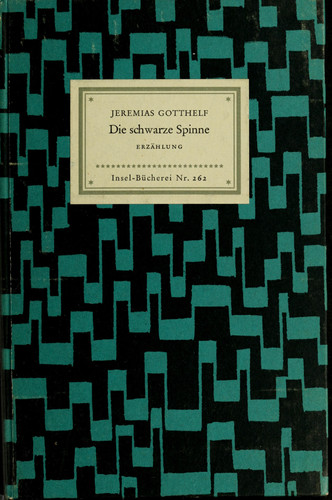
Uli the tenant
2 views
Get This Book
Prices may vary. Links may earn us a commission and open external websites.
Publisher
Independently published
ISBN
ISBN-13: 9798509012594Synopsis
Jeremias Gotthelf (1797-1854) wrote the picaresque novel Uli the tenant, which was published in 1841. The novel's episodic structure is an important feature. However, the novel can also be classified as a Bildungsroman/educational novel, which is meant to direct the reader down the right direction, both in terms of money and respect for God and the master, in keeping with Gotthelf's teaching practices.
Biography
Jeremias Gotthelf (d.i. Albert Bitzius), 4.10.1797 Murten, canton Fribourg - 22.10.1854 Lützelflüh, canton Fribourg Bern was raised in a parsonage, attended the Bern Gymnasium from 1812 to 1814, and then studied theology at the Bern Academy until 1820. He interrupted his vicariate with his father in Utzenstorf, Oberaargau, with a research trip to Göttingen and a journey around northern Germany (1821-22). After his father's death, he was sent to Herzogenbuchsee in 1824, Bern in 1829, and Lützelflüh in the Emmental in 1831, where he was appointed pastor in 1832. His political dedication to liberalism ended with the 1831 constitution, which forbade clergy participation in politics. Instead, following in the footsteps of J. H. Pestalozzi and Swiss popular enlightenment, he fought for the reform of education and social conditions; his criticism of Bern's educational policy resulted in his resignation as school commissioner for his area in 1845. His pen name is derived from his debut novel, "Der Bauern-Spiegel or the Life Story of Jeremiah Gotthelf." Here and in the subsequent early novels and short tales, which continue the pastoral care on the literary level, the harsh critique of social evils, poverty, and alcoholism predominates. With 'Uli dem Knecht,' G. achieved an epic, vast, tranquil depiction of the peasantry of his time, wherein the educational argument is expressed in the juxtaposition of exemplary acts and attitudes toward life in the positive and negative senses.
Biography
Jeremias Gotthelf (d.i. Albert Bitzius), 4.10.1797 Murten, canton Fribourg - 22.10.1854 Lützelflüh, canton Fribourg Bern was raised in a parsonage, attended the Bern Gymnasium from 1812 to 1814, and then studied theology at the Bern Academy until 1820. He interrupted his vicariate with his father in Utzenstorf, Oberaargau, with a research trip to Göttingen and a journey around northern Germany (1821-22). After his father's death, he was sent to Herzogenbuchsee in 1824, Bern in 1829, and Lützelflüh in the Emmental in 1831, where he was appointed pastor in 1832. His political dedication to liberalism ended with the 1831 constitution, which forbade clergy participation in politics. Instead, following in the footsteps of J. H. Pestalozzi and Swiss popular enlightenment, he fought for the reform of education and social conditions; his criticism of Bern's educational policy resulted in his resignation as school commissioner for his area in 1845. His pen name is derived from his debut novel, "Der Bauern-Spiegel or the Life Story of Jeremiah Gotthelf." Here and in the subsequent early novels and short tales, which continue the pastoral care on the literary level, the harsh critique of social evils, poverty, and alcoholism predominates. With 'Uli dem Knecht,' G. achieved an epic, vast, tranquil depiction of the peasantry of his time, wherein the educational argument is expressed in the juxtaposition of exemplary acts and attitudes toward life in the positive and negative senses.
Dimensions
9 inches × 1.28 inches × 6 inches
1.87 pounds