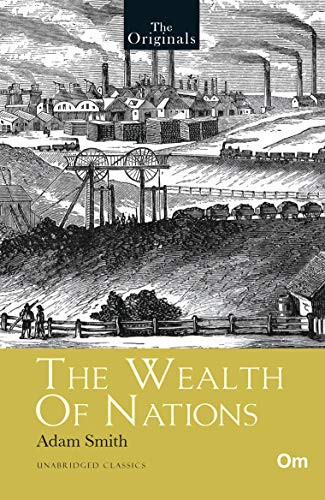
WEALTH OF NATIONS.
8 views
Get This Book
Prices may vary. Links may earn us a commission and open external websites.
Publisher
Om Books International
ISBN
ISBN-13: 9789353764333 ISBN-10: 9353764335Synopsis
Product Description
It is not from the benevolence of the butcher, the brewer, or the Baker that we expect our dinner, but from their regard to their own interest. Scottish political economist and philosopher Adam Smith (1723–1790) is considered the father of modern economics. His influential book, The wealth of Nations, is the first great work in political economy. In it, Smith argues against regulations on commerce and calls for a limited role of the Government. The market economy is to be kept open and free if nations are to prosper, and the government’s core functions must be to maintain law and order, defence, build infrastructure, and promote education. Smith is critical of government control, but not an advocate of laissez-faire. He believes that the market economy can function only when rules are adhered to. Hence the government’s role in maintaining the rule of law is critical. The wealth of Nations, written before the industrial Revolution transformed the world, resonates with readers in modern times and offers valuable lessons in solving the economic conundrums of the day.
About the Author
Scottish political economist and philosopher AdAm Smith (1723– 1790) was the son of the Comptroller of the Customs at Kirkcaldy, Fife, Scotland. He attended University of Glasgow and Oxford University and was deeply influenced by Francis Hutcheson, the well-known professor of Moral Philosophy. In 1751, Smith was appointed Professor of Logic at University of Glasgow where he lectured on Ethics, Rhetoric, Jurisprudence, and Political Economy. Smith is the author of the seminal works, The Theory of Moral Sentiments (1759), The Wealth of Nations (1776), and the posthumously published Essays on Philosophical Subjects (1795). The Wealth of Nations has played a significant role in creating the subject of political economy and developing it into an autonomous and systematic discipline.
It is not from the benevolence of the butcher, the brewer, or the Baker that we expect our dinner, but from their regard to their own interest. Scottish political economist and philosopher Adam Smith (1723–1790) is considered the father of modern economics. His influential book, The wealth of Nations, is the first great work in political economy. In it, Smith argues against regulations on commerce and calls for a limited role of the Government. The market economy is to be kept open and free if nations are to prosper, and the government’s core functions must be to maintain law and order, defence, build infrastructure, and promote education. Smith is critical of government control, but not an advocate of laissez-faire. He believes that the market economy can function only when rules are adhered to. Hence the government’s role in maintaining the rule of law is critical. The wealth of Nations, written before the industrial Revolution transformed the world, resonates with readers in modern times and offers valuable lessons in solving the economic conundrums of the day.
About the Author
Scottish political economist and philosopher AdAm Smith (1723– 1790) was the son of the Comptroller of the Customs at Kirkcaldy, Fife, Scotland. He attended University of Glasgow and Oxford University and was deeply influenced by Francis Hutcheson, the well-known professor of Moral Philosophy. In 1751, Smith was appointed Professor of Logic at University of Glasgow where he lectured on Ethics, Rhetoric, Jurisprudence, and Political Economy. Smith is the author of the seminal works, The Theory of Moral Sentiments (1759), The Wealth of Nations (1776), and the posthumously published Essays on Philosophical Subjects (1795). The Wealth of Nations has played a significant role in creating the subject of political economy and developing it into an autonomous and systematic discipline.
Dimensions
1.85039 inches × 9.99998 inches × 7.99211 inches
2.20462262 pounds