How to set a yearly reading goal you will hit
Most reading goals fail in the setting, not the reading: an aspirational number in January, silence until a December panic. The fix is a smaller number and weekly feedback.
Pick the right number
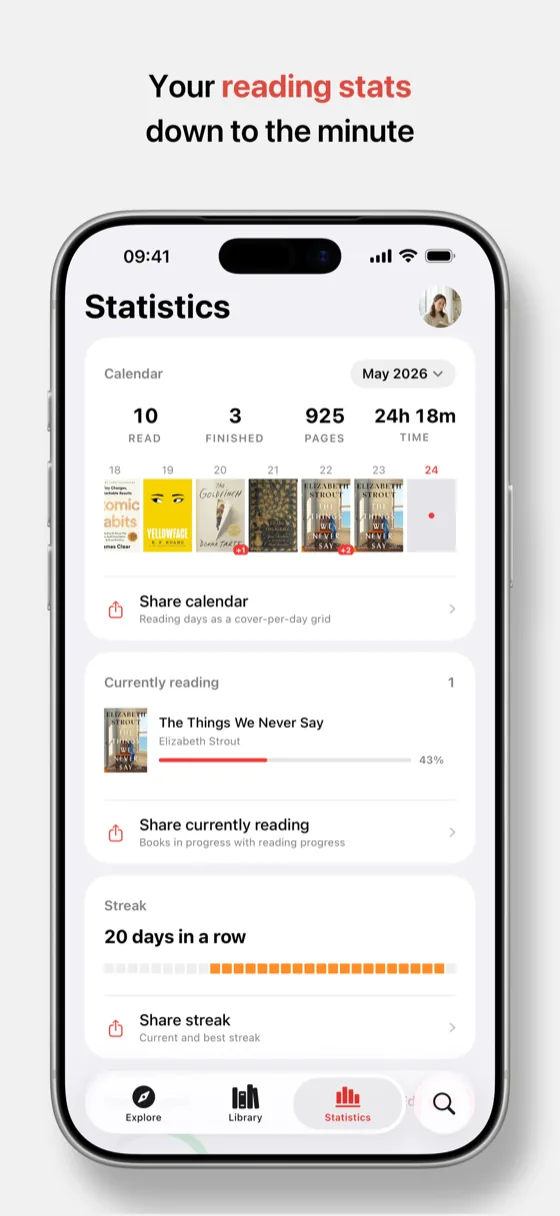
Take last year's real total – your stats page knows it, even if you do not – and add 10 to 20 percent. A goal you hit in November and nudge up next year builds momentum; a goal you abandon in March builds nothing.
Track weekly, not yearly
Must Read shows your yearly goal as weekly progress – ahead, on pace or behind, at a glance. 52 small check-ins beat 1 big reckoning, and being 2 books behind in June is a plan, not a crisis.
Let streaks carry the slow weeks
Goals are yearly; reading is daily. The streak and Reading Calendar keep the daily thread alive when a long book makes the goal counter stand still – War and Peace weeks still light up green.
When you fall behind
Mix in a shorter book or an audiobook for the commute, and DNF without mercy – a book you are avoiding costs you every book behind it. The goal is more reading, not more suffering.
Quick answers
What is a realistic yearly goal?
Whatever last year’s number was, plus a stretch. For most people that is somewhere between 12 and 50 – the median is far lower than social media suggests.
Can I change my goal mid-year?
Yes – adjust it any time. An honest goal you keep is worth more than an ambitious one you ignore.

Set a number you will actually hit this year
- Free for your first 10 books
- Reading timer & Live Activity
- Stats, goals & streaks